
All Things Considered
Listen ↓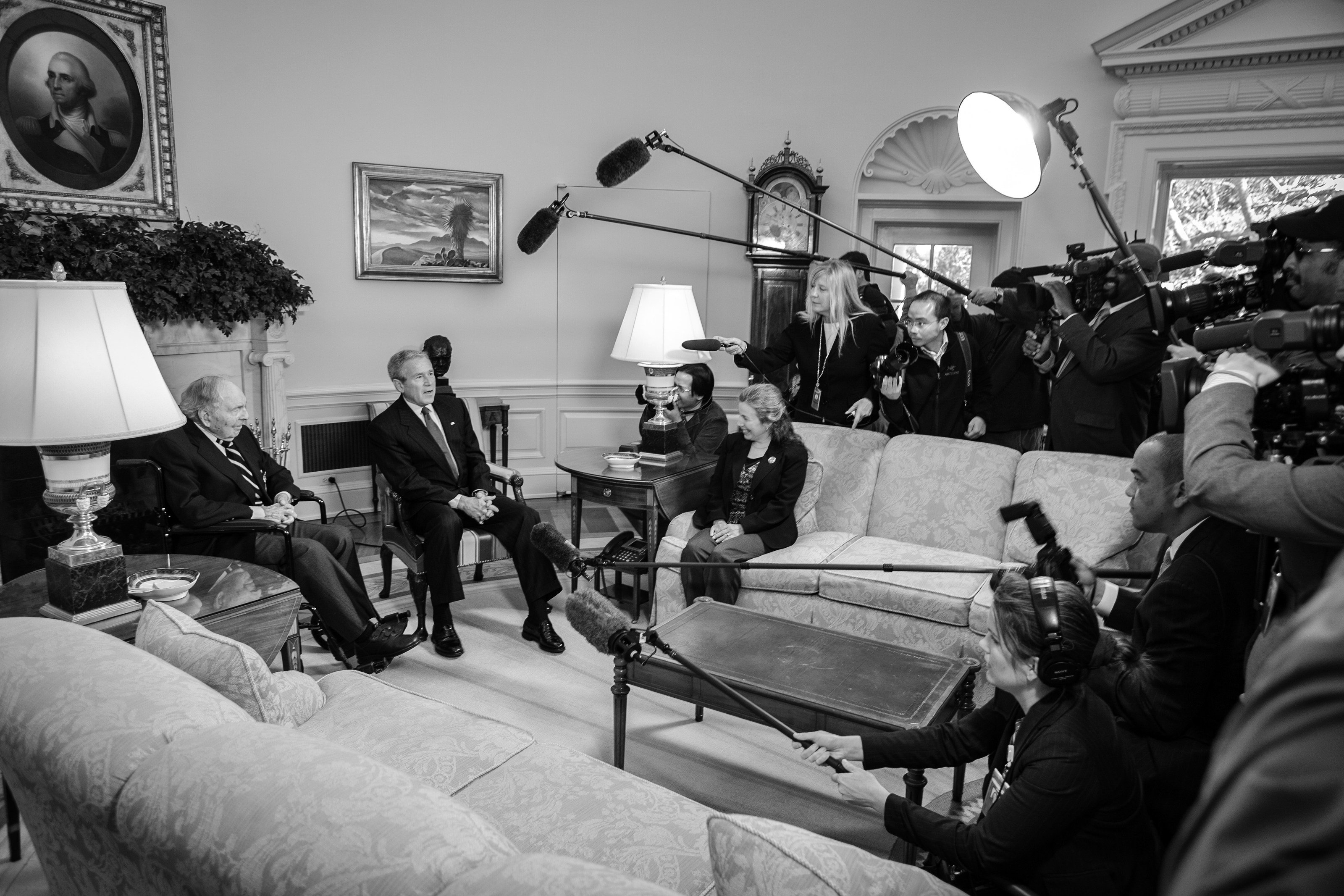
Press · Film · Public record
Government records, national reporting, original writing, documentary credits, and public-history programs spanning portraiture, World War I remembrance, and cultural preservation.
Oval Office · Washington, D.C. · March 6, 2008 · Photograph by David J. DeJonge
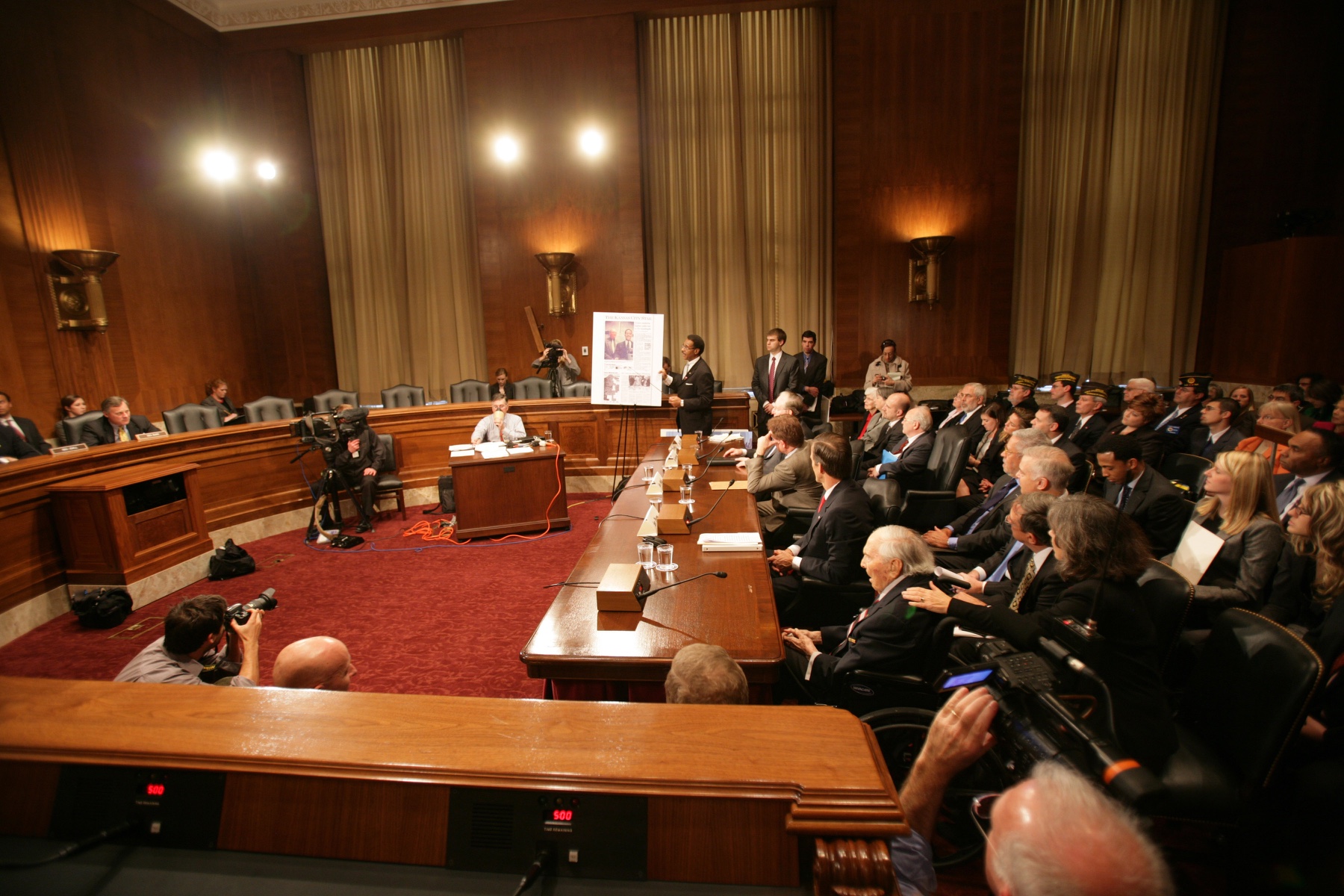
United States Senate · Washington, D.C. · December 3, 2009 · David J. DeJonge Collection
National coverage · Public results
From NPR and the Associated Press to The Washington Post and network news, DeJonge turned photographs, testimony, and citizen campaigns into stories that traveled—then into results: laws passed, money raised, institutions challenged, and a national memorial created.
NPR, AP, CBS, CNN, NBC, The Washington Post, and others reported, interviewed, broadcast, and published.
Wire distribution, broadcasts, regional pickup, and reprints carried the work far beyond its original audience.
Three laws passed. A national memorial was created. Campaigns raised funds and challenged institutions to change.
All Things Considered
Listen ↓
Survivor milestones, honors, obituary, and film
View AP coverage ↓
The memorial appeal in Buckles’s own voice
Find feature ↓
The final World War I veterans
Find coverage ↓
Pentagon, Europe, and Gerald R. Ford

NBC Nightly News
Find video ↓
Five reported or contextual records plus two bylined arguments
Find seven records ↓
Restoration and the memorial campaign
Find feature ↓
A long-form documentary conversation
Watch ↓
The dispute over honoring Frank Buckles
Find report ↓
The three-minute interview
Find interview ↓
The ninety-second Gingrich portrait
Find feature ↓
From the home studio to the Amway Grand Plaza
Find profile ↓U.S. Army · Department of Defense · Veterans Affairs · National Park Service · Congressional Record
Open official sources ↓Original stories, wire pickup and reprints, public records, films, and project archives keep the work visible years after the events.
See the wider public record ↗Behind the numbers: the 30 links on this page are articles, interviews, broadcasts, opinion, trade, and education pieces that have been individually checked. Each original Associated Press dispatch is counted once here, even though a wire story may be republished in many places. A broad search returned approximately 1,260 results on August 24, 2026, rounded to 1,000+; that larger total includes pickups and reprints, public records, film and video pages, directories, duplicates, and DeJonge-owned project pages. It shows the scale and staying power of the public record—not 1,000 separate original news stories. Outlet marks are shown solely to identify the publishers of linked coverage; all marks remain the property of their respective owners.
Career in context
The public campaign is one chapter in a larger career. DeJonge Studio and Legacy Icons document two founder-led enterprises; the World War I work entered the Pentagon, congressional proceedings, national media, museums, classrooms, and the editorial pages of The Washington Post.
For editors, producers & organizers
Short, medium, and full biographies; interview subjects; name guidance; and direct links to reporting and public sources.
Enterprise
Begin with a visual craft, build trusted relationships around it, and turn exacting work into a durable enterprise.
David developed DeJonge Studio into a portrait enterprise at the Amway Grand Plaza Hotel, serving private families and political, civic, business, and philanthropic leaders.
Explore the studio standards →Legacy Icons applies faithful reproduction and historical interpretation to Christian imagery, extending skills developed during David’s portrait career.
Official company history ↗Friends of Mount Sinai Monastery documents David and the Legacy Icons team’s role in a replica-icon collaboration supporting the monastery.
Institutional account ↗Portraiture & photographic craft
Contemporary coverage shows not only whom David photographed, but how he worked: large-format cameras, portable studio lighting, trusted access, and close attention to the finished print.
The official magazine archive opens at the article’s first page. Contemporary trade coverage confirms the ninety-second Grand Rapids sitting, use in Gingrich’s calendar and website, and the later Washington follow-up with 4 × 5 and medium-format cameras, Kodak film, and Photogenic lighting.
Michigan Retailer · May 2003Amy Buttery’s contemporary profile documents the home-studio beginnings, the purpose-built Amway Grand Plaza studio, the Gingrich commission, international competition honors, and David’s view of photography as a business built through continual learning.
CNN · December 2006David’s 2003 Ford portrait is displayed during The Situation Room and described as Ford’s last formal portrait around his ninetieth birthday.
DeJonge Studio · Craft standardThe enterprise story explains the studio’s standards for color fidelity, material discipline, and long-term durability.
Official record
Accounts and images created by the institutions involved.
The Army’s account of the Pentagon ceremony, the portrait project, and the permanent nine-portrait exhibition.
Background: Frank W. Buckles in his World War I uniform, 1917.Open official account ↗ Department of Defense · Image recordOfficial image and caption from the March 6, 2008 unveiling; marked public domain.
View the record ↗ Department of Veterans Affairs · 2008The VA’s account of the nine veterans, David’s research, and the Pentagon installation.
Open VAnguard ↗ National Park Service · 2009Names David as president, Edwin Fountain as secretary/treasurer, and records the foundation’s objectives.
Open correspondence ↗ Congressional Record · 2009Links Creekwood Middle School’s work with David’s national traveling exhibition.
Open Congressional Record ↗Broadcast & national press
Independent contemporary reporting on the veterans, portraits, and memorial effort.
NPR · All Things Considered · February 7, 2008
Robert Siegel interviews David DeJonge following Harry Landis’s death about the urgency of documenting the final World War I veterans.
Documents the eighteen-month portrait effort, Pentagon exhibition, and emerging memorial campaign.
CNN · March 6, 2008Contemporary network coverage of the ceremony and collection.
NBC Nightly News · VideoThe network segment follows the effort to document the final World War I veterans.
CNN Europe · VideoA CNN Europe interview concerning the last surviving veterans.
Washington Examiner · InterviewA concise contemporary account of the memorial advocacy.
The memorial campaign in the press
Reporting followed the last veterans, the Pentagon portraits, the restoration of the D.C. memorial, the dispute over Capitol honors, and the long argument over a national memorial.
Independent military reporting from the D.C. War Memorial press event with Frank Buckles, Representative Ted Poe, and David DeJonge.
Read the feature ↗ Roll Call · March 4, 2011Capitol Hill coverage of the dispute over whether Frank Buckles would lie in honor in the Rotunda.
Read the report ↗ Los Angeles Times · November 28, 2010National reporting on Buckles, David, the D.C. memorial, and the debate over national commemoration.
Read the feature ↗ The Philadelphia Inquirer · February 1, 2009A portrait of Buckles and the wider effort to photograph the final American veterans.
Read the feature ↗ PBS / WGVU · November 13, 2015A long-form conversation about producing the documentary and carrying the veterans’ story to the screen.
Watch the interview ↗ The Washington Post · May 25, 2008Edward G. Lengel places Buckles’s memorial visit, White House and Pentagon honors, and the absence of a national World War I memorial before a national readership.
Read the essay ↗ The Washington Post · February 28, 2011The Post’s obituary records Buckles’s life, his role as the last Doughboy, and his final campaign for a national memorial.
Read the obituary ↗ The Washington Post · March 31, 2011John Kelly reports the emerging dispute over location, national status, Pershing Park, and the memorial foundation Buckles supported.
Read the report ↗ The Washington Post · March 28, 2012John Kelly reports on the location and legislative conflict, including David’s role in the campaign.
Read the report ↗ The Washington Post · April 30, 2021Philip Kennicott assesses the completed national memorial at Pershing Park and the long public effort to recover the war from national forgetting.
Read the assessment ↗ Fox News · March 2011Coverage of the alternative offered after requests for Rotunda honors were rejected.
Read the report ↗Associated Press coverageFive distinct reports, each counted once regardless of syndicationView five reportsWriting & commentary
The memorial debate, presented directly to a national readership.
By David DeJonge, then identified as president of the National World War I Memorial Foundation and producer-director of Pershing’s Last Patriot.
Read the essay ↗ January 14, 2018David returned to the question of location, national meaning, and the promise made to Frank Buckles.
Read the opinion letter ↗Feature documentary
The story of America’s last World War I veteran—and the struggle over how the nation should remember his generation.
David is credited as director, co-writer, and executive producer. The film draws on the access and testimony gathered through the veteran portrait project and the years of advocacy that followed.
Watch the complete documentary:
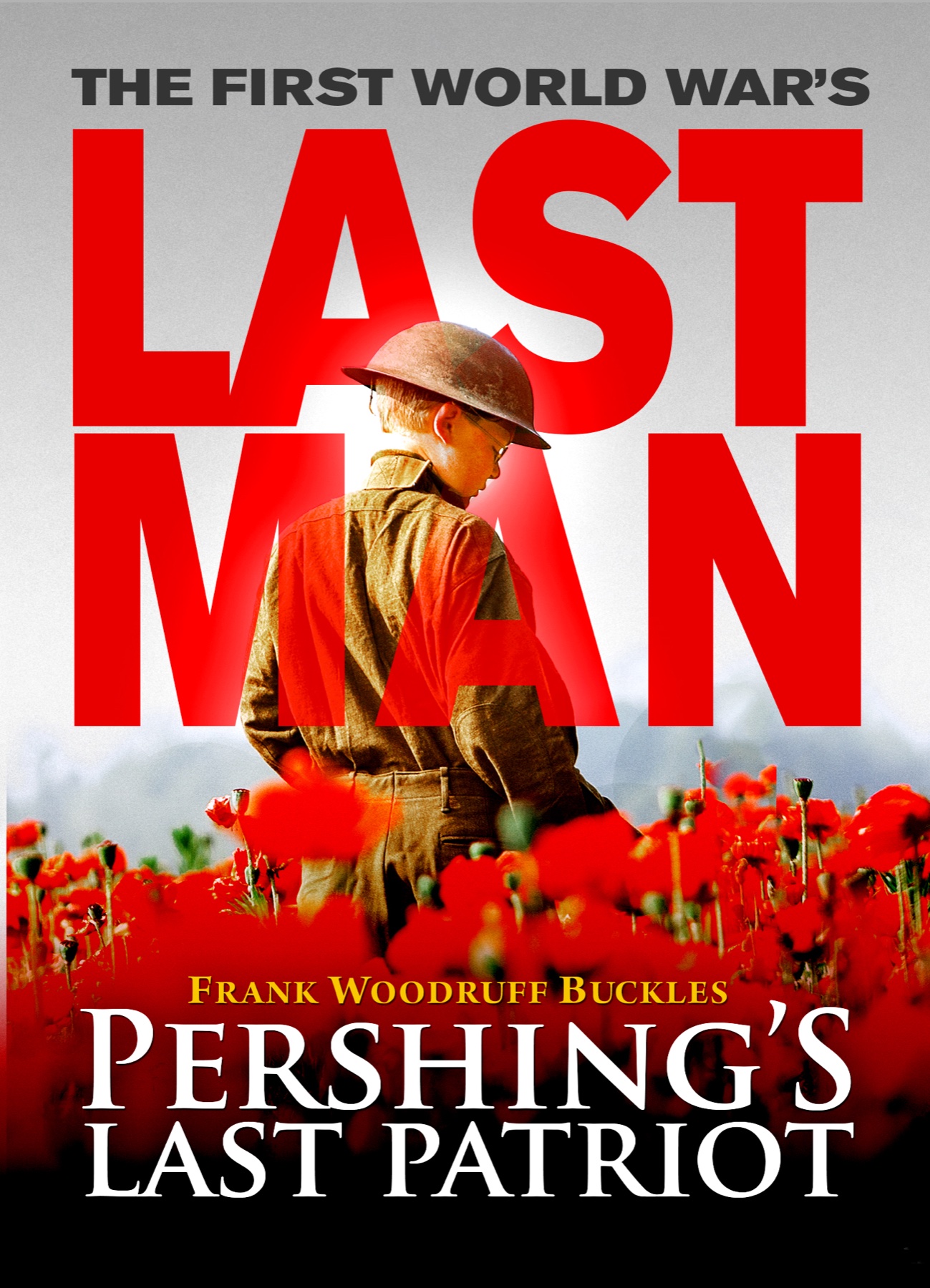 Original promotional artwork for Pershing’s Last Patriot
Education & public history
Research, exhibitions, service learning, fundraising, and direct engagement with Frank Buckles.
Students served as docents, assembled an exhibition, and connected schoolwork to the memorial campaign.
Houston Chronicle ↗The Creekwood community raised approximately $14,000 and traveled to present the contribution to Frank Buckles.
Houston Chronicle ↗Jefferson Junior High students built trenches, model battlefields, posters, and music programming around the traveling portraits.
Daily Herald ↗Public video collection
Congressional messages, network segments, veteran interviews, school programs, memorial advocacy, and documentary footage are preserved on the Pershing’s Last Patriot channel. The Public Work page now pairs the strongest films with the events they document; the complete channel remains available for deeper research.