David’s role
Witness, education, coalition building, public advocacy, and sustained attention.
The DeJonge Record · Public work
Documented work for veterans, national memory, public health, student safety, and civic learning—showing what David did, what institutions did, and what changed.
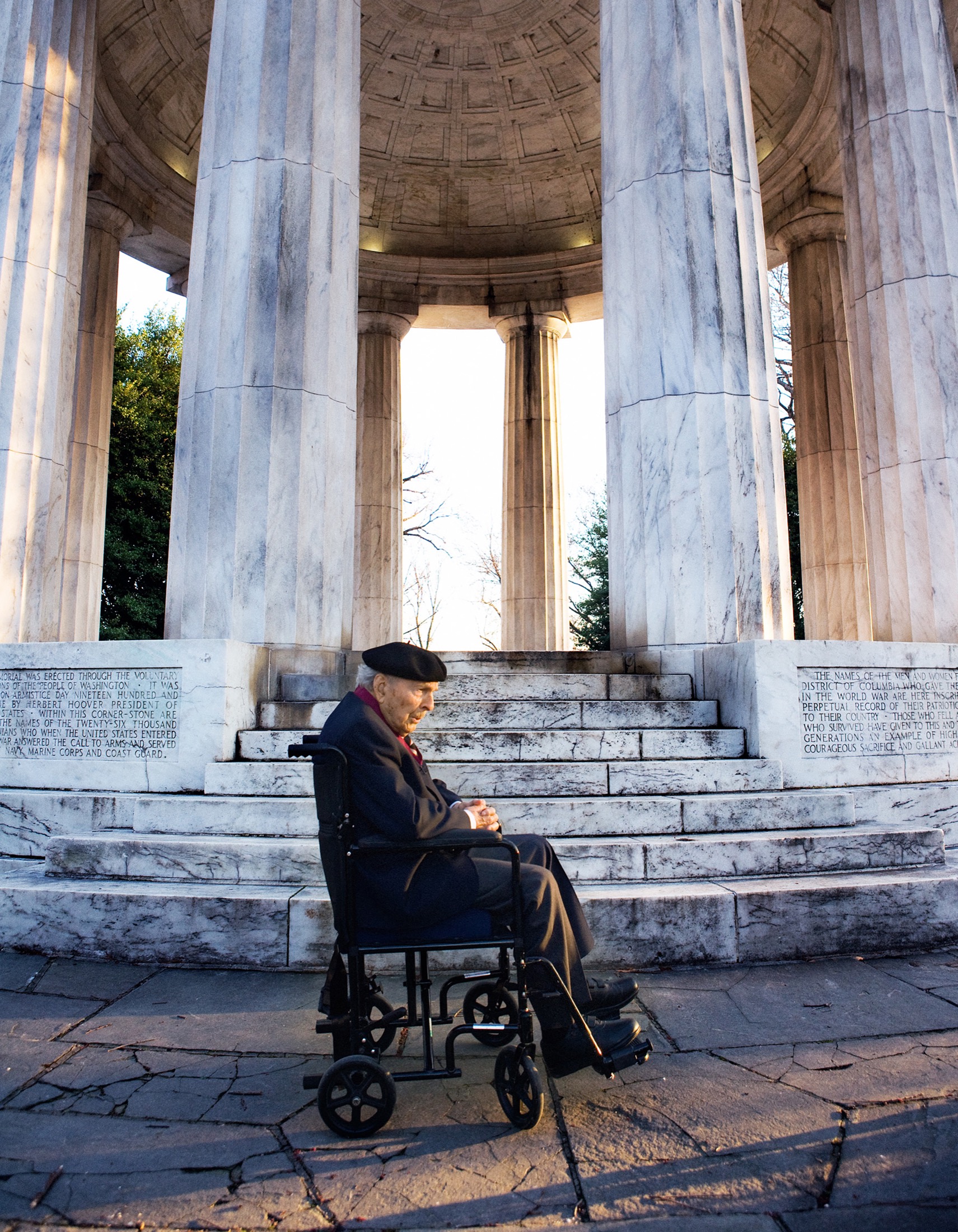
D.C. War Memorial · Washington, D.C. · September 9, 2008 · DeJonge Collection
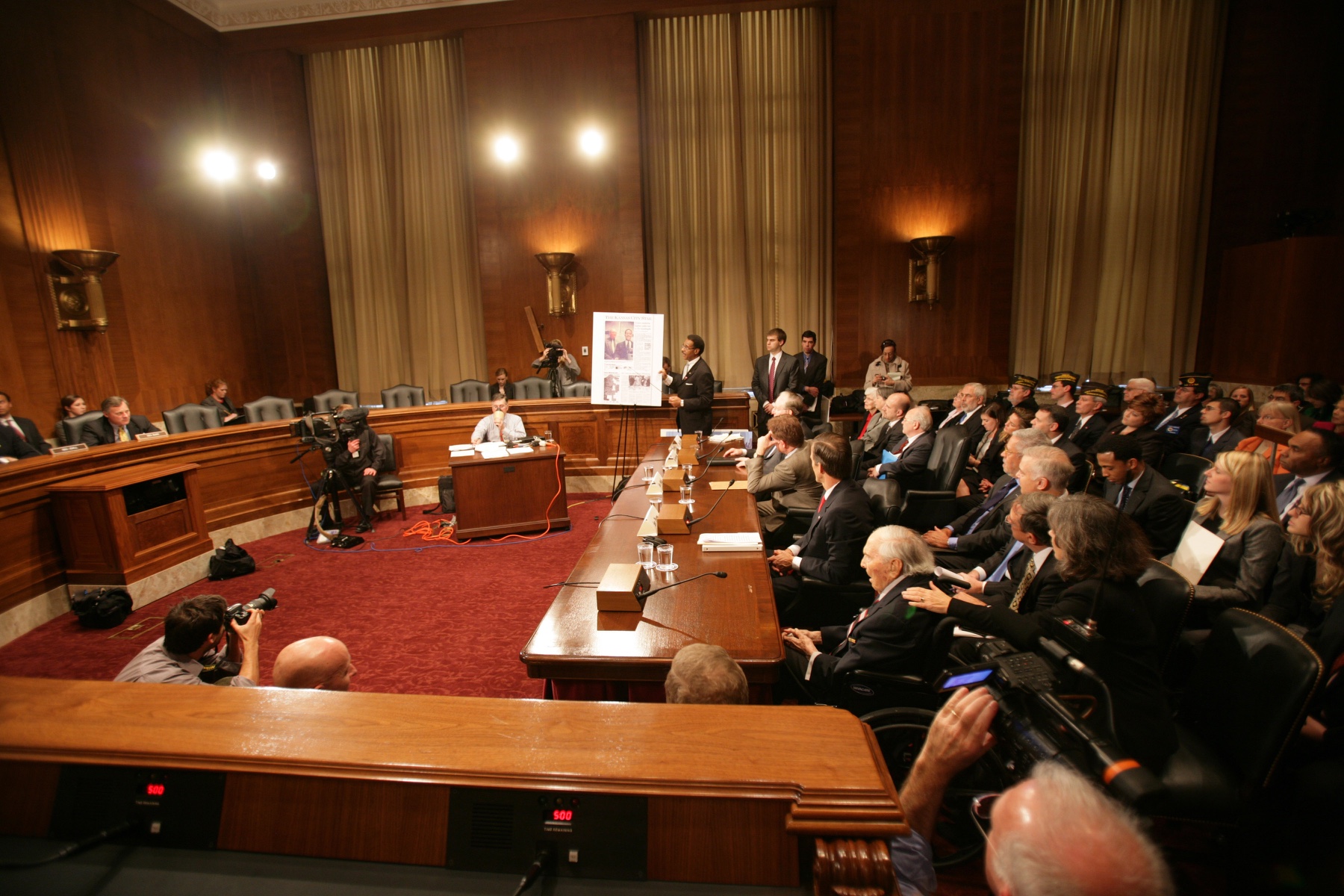
United States Senate · Washington, D.C. · December 3, 2009 · David J. DeJonge Collection
Pursue truth. Act with honor. Defend the defenseless.
David J. DeJonge · Defensio Indefensorum · “Defending the Defenseless.”
Action, documented
DeJonge’s public work begins with first-hand witness and continues through documented action. Explore five campaigns—and the photographs, public records, and results that remain.
Witness, education, coalition building, public advocacy, and sustained attention.
Introducing, sponsoring, amending, voting on, and enacting federal measures.
Planning, funding, design review, construction, preservation, and public operation.
Case record 01 · The promise
One neglected memorial. America’s last World War I veteran. Two promises that redirected the next decade of David’s life.
After a day of national honors on March 6, 2008, Frank Buckles asked David to help restore the District of Columbia War Memorial—and to fight for national recognition of every American who served.
“Keep your word.”
Frank W. Buckles · as recalled by David J. DeJonge
The complete account · March 6, 2008
That morning, Frank Woodruff Buckles, America’s last surviving World War I veteran, met President George W. Bush in the Oval Office. Later, at the Pentagon, nine of David’s portraits of the last World War I veterans were unveiled for permanent exhibition.
Open the complete Pentagon and British portrait collection Hear Frank Buckles’s oral history at the Library of Congress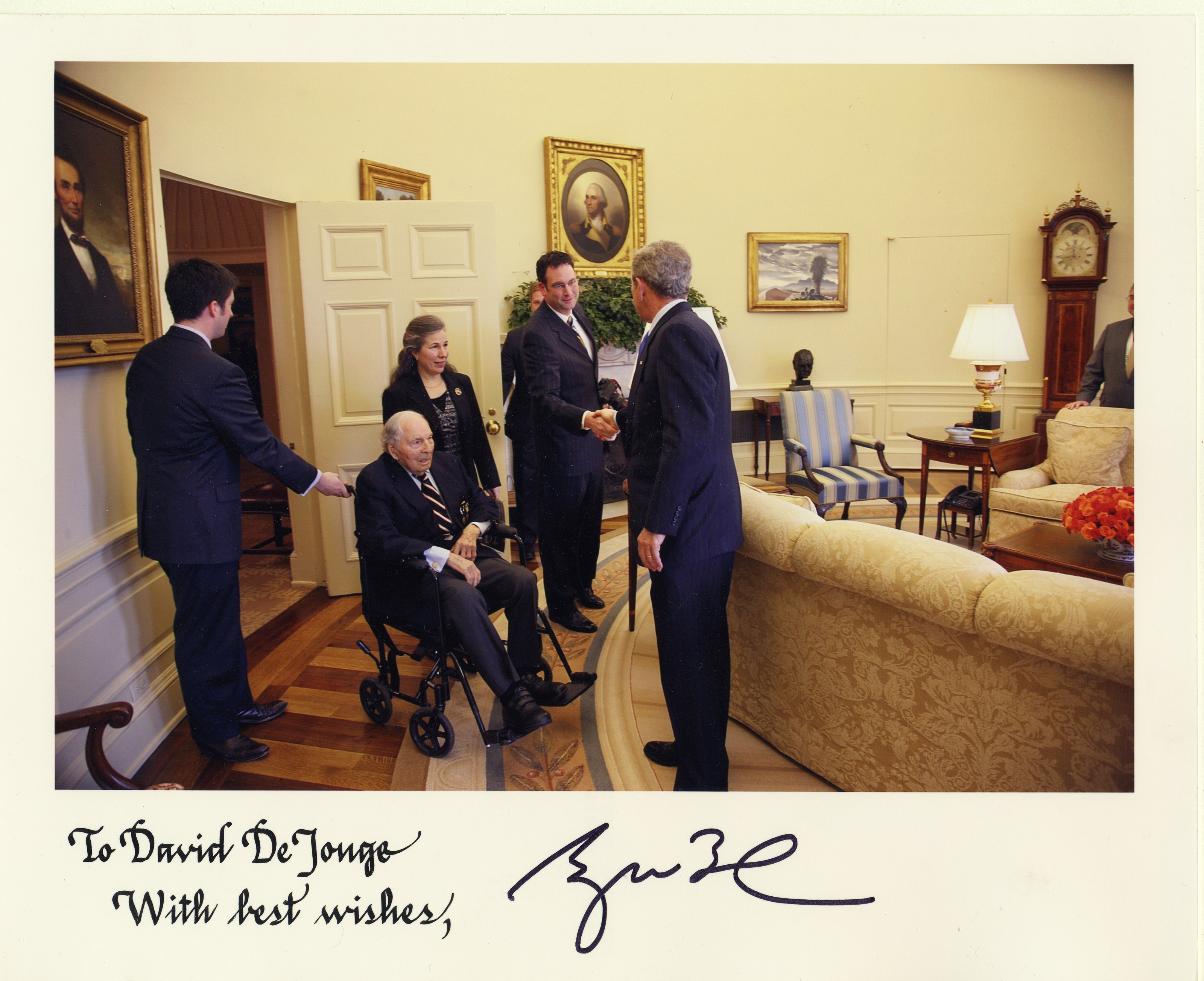
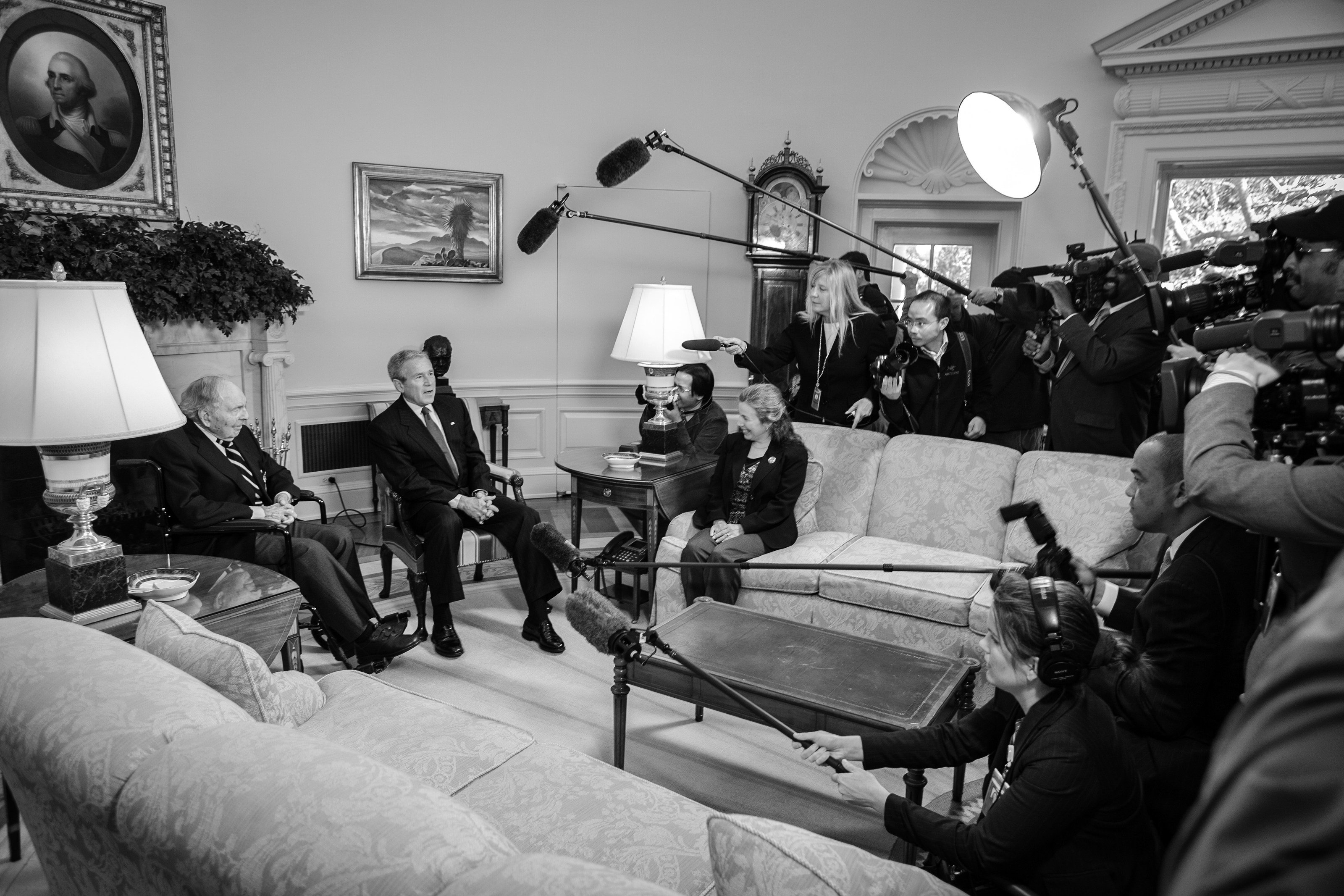
After the ceremonies, David took the 107-year-old Buckles to see the District of Columbia War Memorial in Washington. Reaching it meant guiding his wheelchair around broken pavement. The memorial was stained, neglected, and nearly forgotten. At its foot, David recalls, Buckles asked him to help restore it—and to fight for a national memorial honoring every American who served in the Great War.
News footage
Courson’s two-minute CNN segment includes Buckles at the D.C. memorial. David recalls Courson filming their conversation there during the March 6 visit. The footage preserves the setting in which the campaign began.
Watch the CNN segment ↗David made two promises: restore this memorial, and keep working for national recognition on the Mall. What followed was not a straight path. Bills were introduced, stalled, revised, and returned. Students built exhibitions and raised funds. Veterans, journalists, members of Congress, and ordinary citizens joined the cause. David says the effort was conducted without paid lobbyists and continued through severe personal and family financial strain in the aftermath of the Great Recession.
The National Park Service completed the D.C. memorial’s restoration in 2011. The larger campaign continued through repeated legislation, competing proposals, and an eventual site decision David opposed. Never giving up did not mean that every battle ended as he and Buckles intended. It meant refusing to let their generation disappear from the national record.
“Keep your word.”
Frank W. Buckles · as recalled by David J. DeJonge from a conversation when Buckles was 108
Those three words became the measure of the work. The promise was larger than a building: remember the witnesses, tell the truth about what happened, and stay with the mission when recognition, money, and institutional support fall away.
The geography of the campaign
Buckles asked David to help restore Washington’s local World War I memorial on the National Mall. Congress later authorized the national memorial at Pershing Park near the White House—approximately one mile by practical pedestrian routes, or about a 20–30-minute walk depending on route, crossings, and pace.
North-up locator · Washington, D.C.
In West Potomac Park, between the Reflecting Pool and Independence Avenue. It honors District residents who served in World War I and was restored in 2011.
Official NPS location ↗At the former Pershing Park, along Pennsylvania Avenue between 14th and 15th Streets NW. The national memorial opened to the public in 2021 and reached completion in September 2024 with the installation of A Soldier’s Journey.
Official NPS location ↗Locations and project status based on National Park Service, National Capital Planning Commission, Commission of Fine Arts, and memorial-sponsor records, checked August 2026. Completion dates are sponsor targets and may change. Walking time varies by route, street crossings, and pace. Diagram not for navigation.
The DeJonge Record · Citizen campaign scoreboard · 2008–2014
The World War I campaign did not turn on a single bill—or a Washington lobbying firm. Memorial, Centennial Commission, and commemorative-coin proposals returned in the House and Senate until three measures became law. The National Park Service also completed restoration of the D.C. War Memorial in 2011.
The 110th through the 113th Congresses considered related proposals.
Separate memorial, commission, combined, and commemorative-coin measures.
The Centennial Commission, the commemorative coin, and the Pershing Park memorial framework.
No K Street machine. David describes a citizen campaign built on witness, public education, media, relationships, and persistence.
The resultA national war memorial
The citizen campaign helped carry the cause from witness and public pressure into federal law. Congress authorized the National World War I Memorial at Pershing Park; it opened in Washington, D.C., in 2021 and reached completion in September 2024 with the installation of A Soldier’s Journey.
Across the 110th through 113th Congresses, the record includes 16 related House and Senate bills covering memorial, commission, and coin proposals. Three Kansas City-only recognition bills bring the broader standalone count to 19. “Zero” refers specifically to paid lobbyists hired by David’s campaign; members of Congress, congressional staff, veterans’ advocates, citizens, and federal agencies all played essential roles. David’s advocacy formed part of the citizen campaign; Congress introduced and enacted the legislation.
The DeJonge Record · On film
Legislation records what government considered. These films preserve what the campaign felt like: rain, fatigue, disagreement, resolve, and the voice of a 108-year-old witness asking the nation to remember.
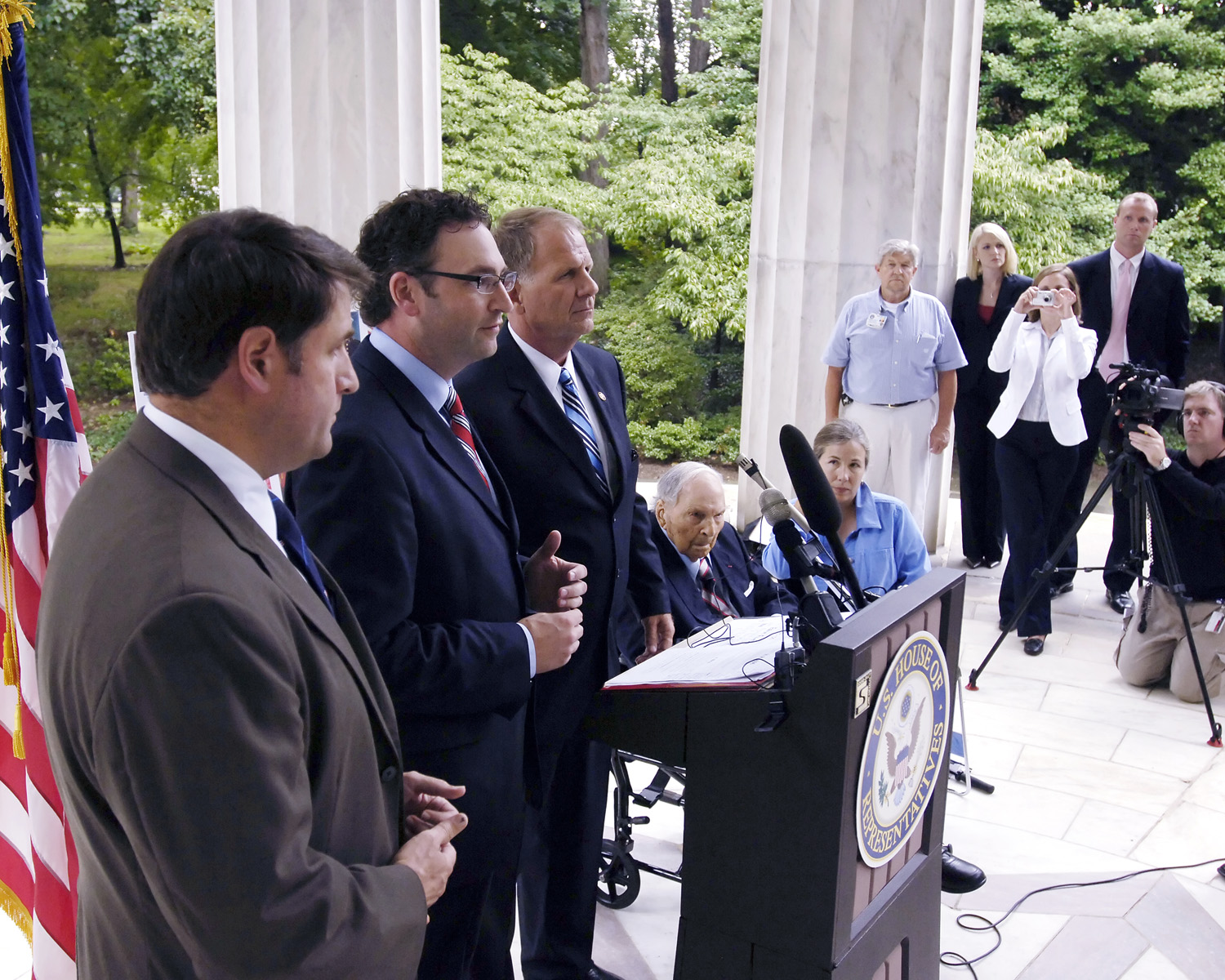
Frank Buckles and Representative Ted Poe came to Washington’s neglected World War I memorial to make the case for national recognition. David’s film records the small press gathering in the rain and his account that expected organizational support did not materialize. They continued anyway.
The official hearing transcript preserves Buckles’s brief endorsement of a national memorial. David’s film recounts the extraordinary physical toll of bringing the 108-year-old veteran to testify.
A documentary outtake follows David seeking answers from Speaker John Boehner’s office after proposals to honor Buckles in the Capitol Rotunda stalled. The dispute also frames the Blackfeet delegation’s appearance at the Capitol.
This campaign film brings President Barack Obama’s remarks together with the longer effort to secure national commemoration for the World War I generation.
More from the campaign archive
 Congress · December 2012
 Frank Buckles · In his own voice
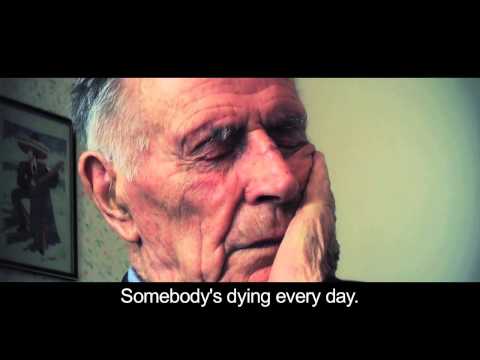 The last witnesses · United States & Britain
 Public memory · Arlington
The DeJonge Record · Selected case records
The outcomes were never the work of one person. David’s contribution was to keep the last witnesses and the missing national memorial before the public, schools, press, federal agencies, and elected leaders over many years.
The catalyst
After the Pentagon unveiling and White House visit, David accompanied Buckles to the neglected District of Columbia War Memorial. David’s 2011 published account recounts the two promises he made that day: help restore the memorial and fight for national recognition of the World War I generation on the Mall.
Organization
A 2009 National Park Service filing identifies David as president and Edwin Fountain as secretary/treasurer, and states that the foundation was organized in August 2008.
H.R. 482
Representative Ted Poe introduced legislation to rededicate the D.C. War Memorial as both a District and national World War I memorial. The bill attracted 51 cosponsors but did not become law.
S. 2097 & hearing
Sen. John Thune introduced S. 2097 on October 29, 2009, with Sens. Jay Rockefeller and Jim Webb supporting the proposal. At the December 3 Senate hearing, Frank Buckles offered brief remarks and Edwin Fountain delivered the World War I Memorial Foundation’s formal testimony.
Federal restoration
The foundation publicly advocated for the deteriorated memorial. The National Park Service planned and completed the federally funded restoration, reopening the site in November 2011.
Public Law 112-272
Approved January 14, 2013, the law created the federal commission responsible for centennial planning and related duties. It did not itself create the national memorial.
Public Law 113-212
Working with the American Numismatic Association, David contributed to sponsor outreach and draft language for the World War I coin proposal. Representative Doug Lamborn formally introduced H.R. 2366; Congress enacted it as Public Law 113-212, authorizing the 2018 silver-dollar program.
Public Law 113-291 §3091
The 2014 law designated the Liberty Memorial at the National World War I Museum in Kansas City as a World War I Museum and Memorial. It redesignated the Pershing Park commemorative work as a World War I Memorial and authorized its enhancement. The completed Washington site is now known publicly as the National World War I Memorial.
The Washington Post
David published two bylined opinion pieces arguing that the national World War I memorial belonged on the National Mall: a guest opinion in 2014 and an opinion letter in 2018.
Frank Buckles
Two concurrent resolutions in the historical record; neither was adopted by both chambers.
Proposed use of the Capitol Rotunda to honor Frank Buckles during the 112th Congress.
Congressional Record ↗Proposed that Buckles’s remains lie in honor in the Capitol Rotunda. The resolution was referred to committee.
Official text ↗Citizen action and public authority
David describes the effort as citizen-led and conducted without paid lobbyists. The campaign supplied witness, public education, relationships, attention, and persistence. Congress and federal agencies held authority over legislation, appropriations, planning, construction, and stewardship.