The verified story
A life carried forward in the record.
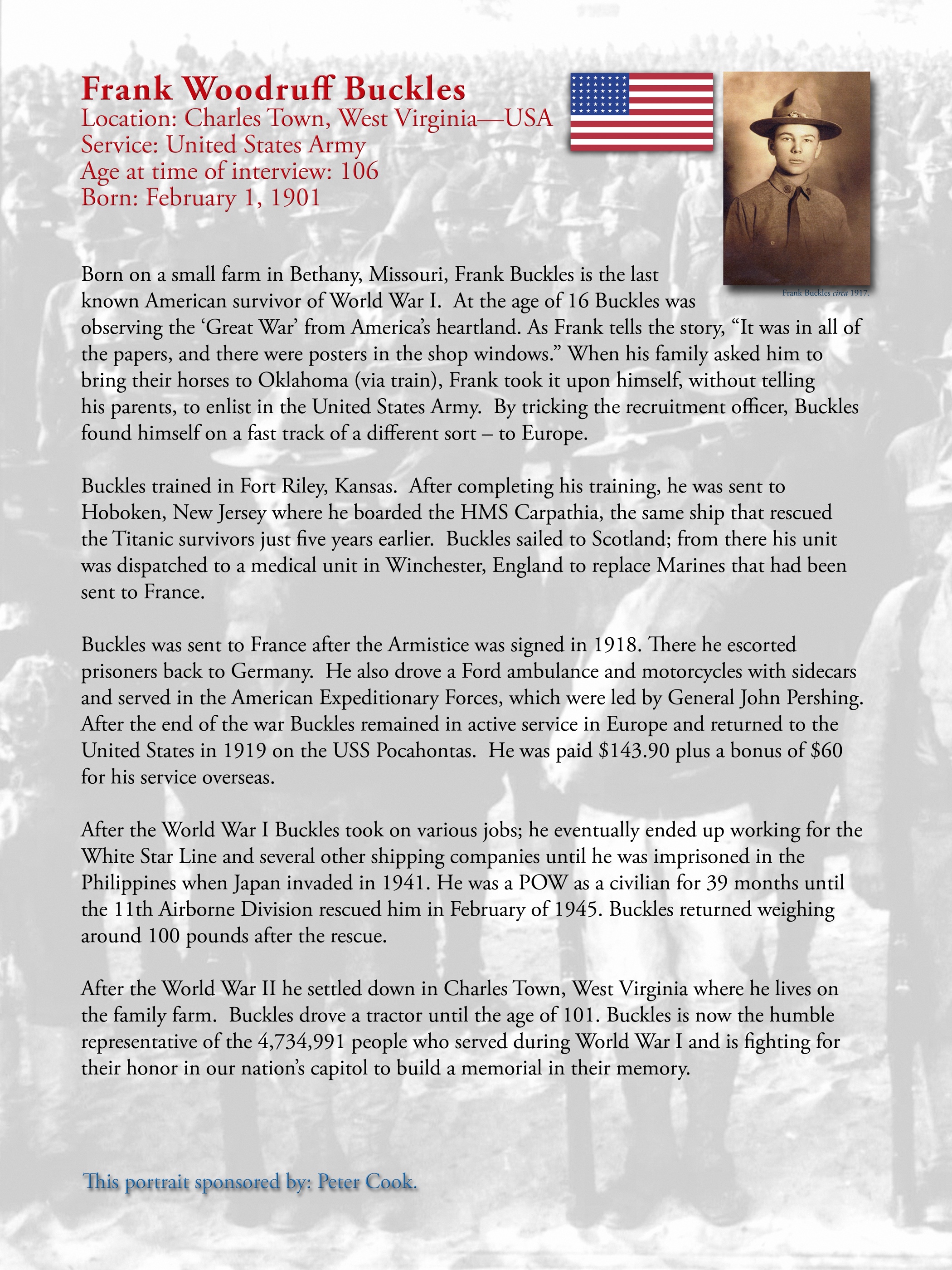
Frank Woodruff Buckles was born February 1, 1901, near Bethany, Missouri. At sixteen, while transporting family horses to Oklahoma, he decided to enlist without telling his parents. After several refusals, he persuaded an Army recruiter that he was old enough. Training at Fort Riley led to an Atlantic crossing aboard Carpathia, the ship that had rescued survivors of Titanic five years earlier.
Buckles served in England and France as a driver of cars, motorcycles, and ambulances. After the Armistice, he escorted German prisoners home and remained with the occupation forces before returning to the United States. The Army record is important here: Buckles served overseas, but he did not claim combat service. His life nevertheless crossed a second world war. Working in shipping in Manila when Japan invaded the Philippines, he was imprisoned as a civilian for more than three years and liberated in 1945.
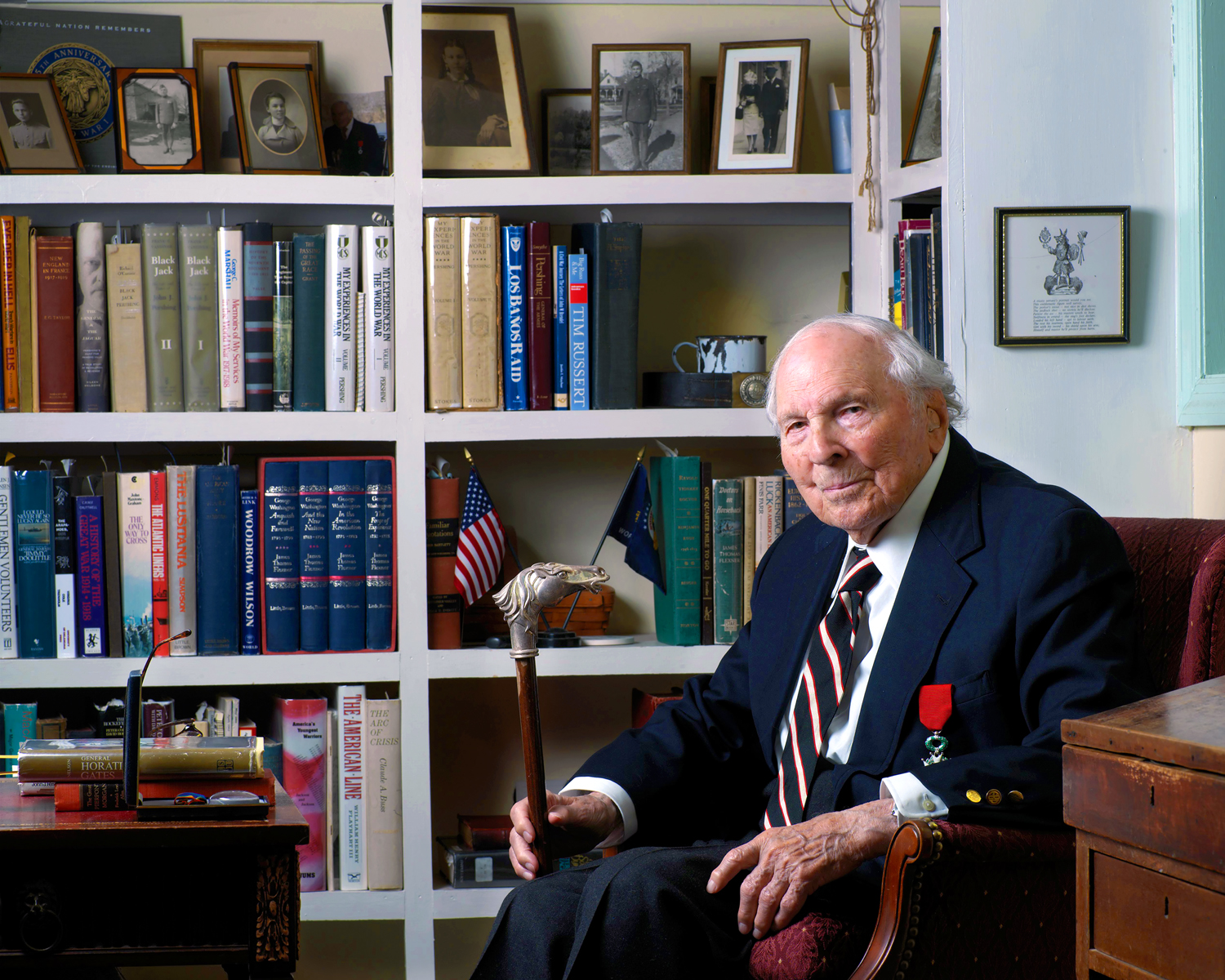
DeJonge first approached Buckles as a witness. The relationship became a partnership. Buckles’s memory, composure, and insistence that the First World War generation deserved national recognition gave the portrait project a public mission beyond the frame. He was honored at the Pentagon and met President George W. Bush in 2008. In 2009, at 108, he spoke before a Senate subcommittee in support of a national memorial. The final American witness had become an advocate for millions whose voices were gone.