The verified story
A life carried forward in the record.
Harry Richard Landis was born December 12, 1899, in Marion County, Missouri, and grew up in a farming family. He remembered first learning about the distant European war in Sunday school, when his teacher read news of the sinking of the Lusitania. By 1918, Landis was eligible to take his own small place in that history.
He entered the U.S. Army through the Student Army Training Corps while attending college in Missouri. The war had consumed matériel so rapidly that the new trainees initially drilled in civilian clothing and did not have weapons. “The first thing I got was an Army overcoat,” he later recalled. Landis never completed training and never went overseas. Instead, the influenza pandemic shaped his service. He worked in a makeshift infirmary in a college dormitory, cleaning after sick soldiers as the epidemic moved through the country.
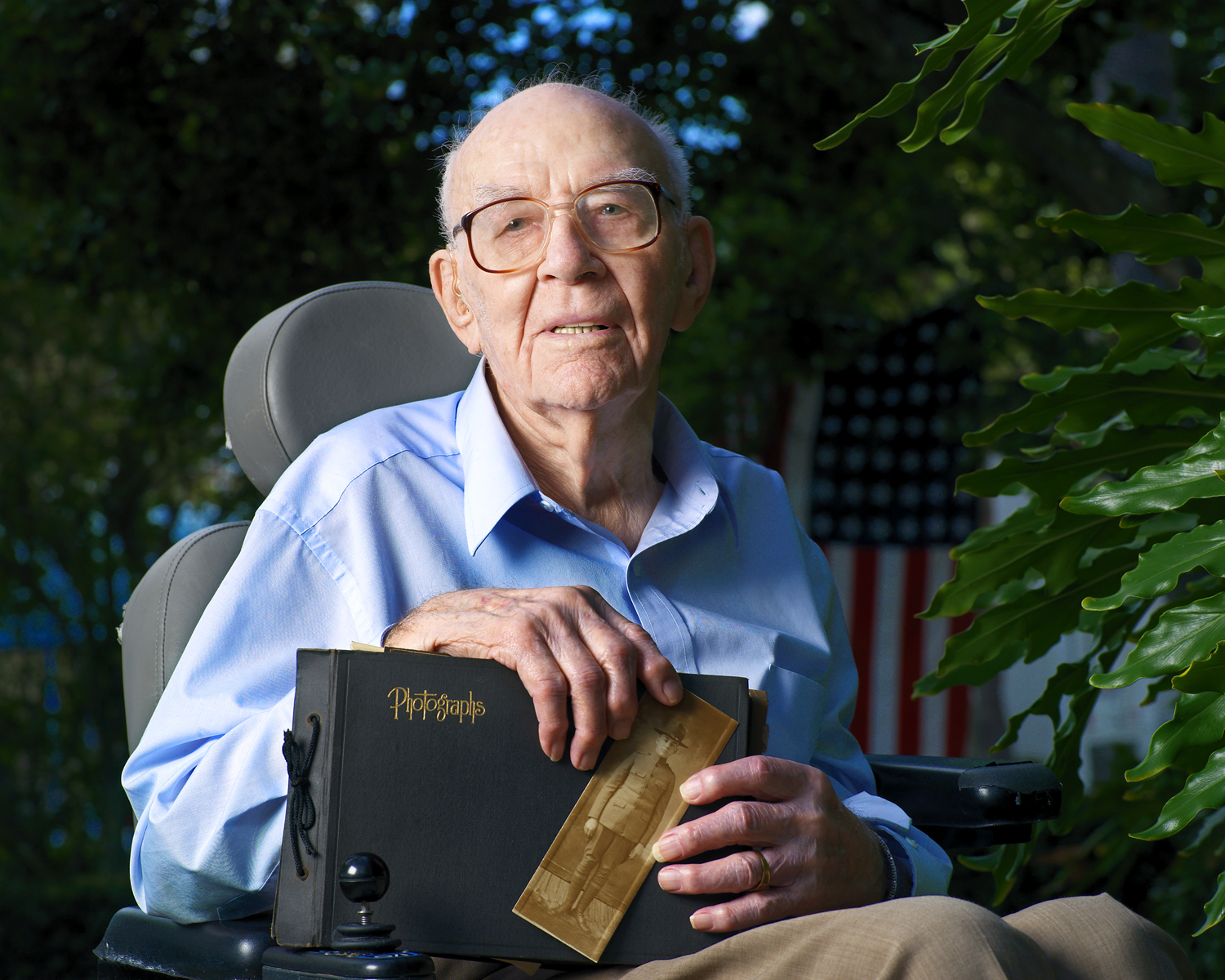
The Armistice arrived after roughly two months. Landis remembered soldiers piling into a car and circling the town square, sounding the horn in celebration. He liked to joke that the Kaiser had heard he was there and quit. DeJonge’s portrait respects the humor while keeping the scale honest: this was not a combat story. It was the experience of a young American pulled briefly into a mobilized nation, then carried by extraordinary longevity until only two known U.S. veterans remained. The ordinary training camp had become historical ground simply because its witness endured.