The verified story
A life carried forward in the record.
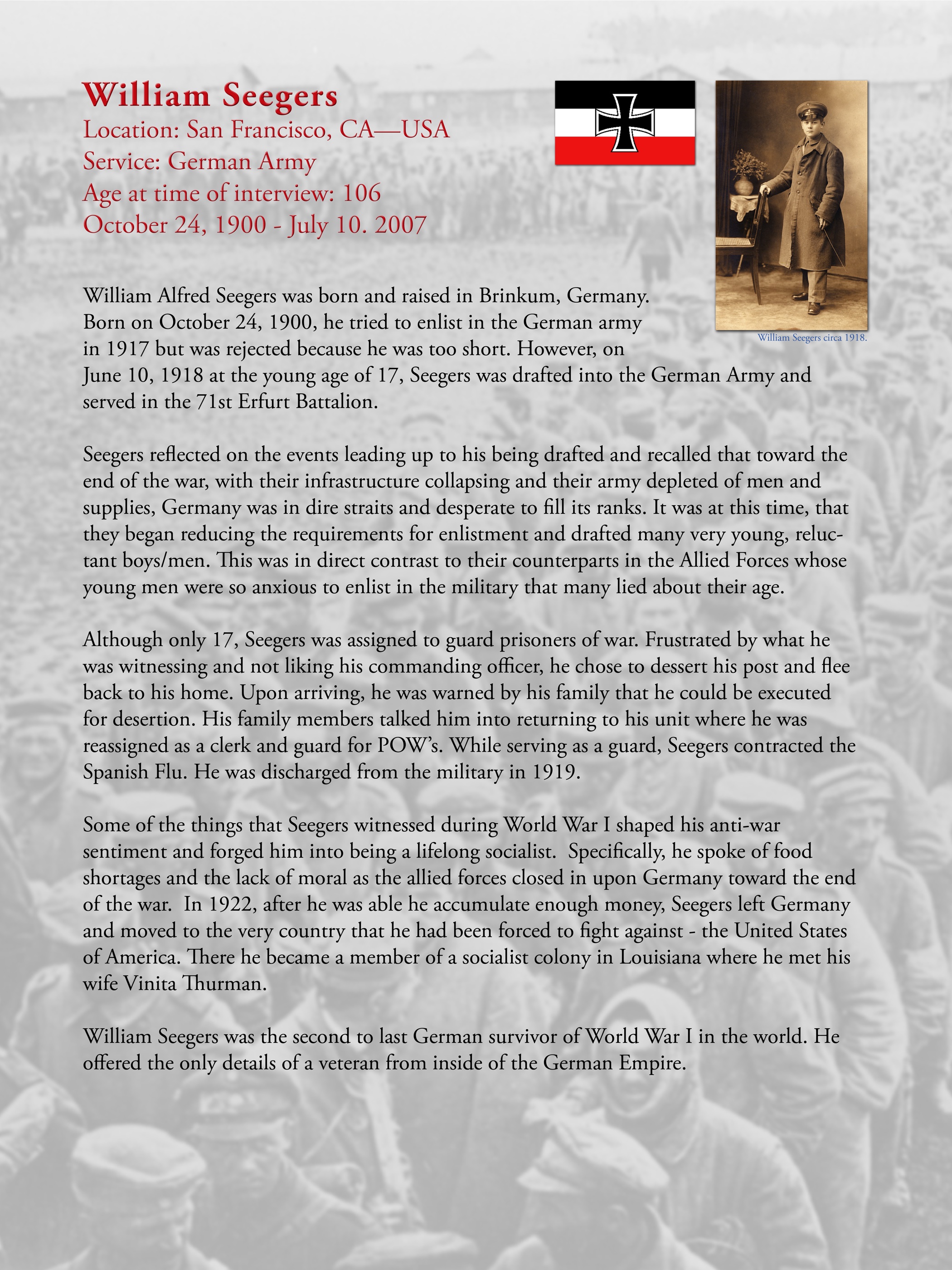
William Alfred Seegers was born October 24, 1900, in Brinkum, Germany. He was initially rejected as too short for military service, but Germany’s worsening need for men brought a new decision. On June 10, 1918, at seventeen, he was drafted into the Imperial German Army and assigned to the 71st Erfurt Battalion.
Seegers’s account gave DeJonge’s collection a view from inside the collapsing German war effort. Assigned to guard prisoners, he recoiled from what he saw and from his commander. He deserted and returned home, only to be warned by his family that capture could mean execution. He went back to the Army and was reassigned as a clerk and prisoner guard. Food shortages, deteriorating morale, and influenza marked the final months. The experience hardened an antiwar conviction that stayed with him for life.
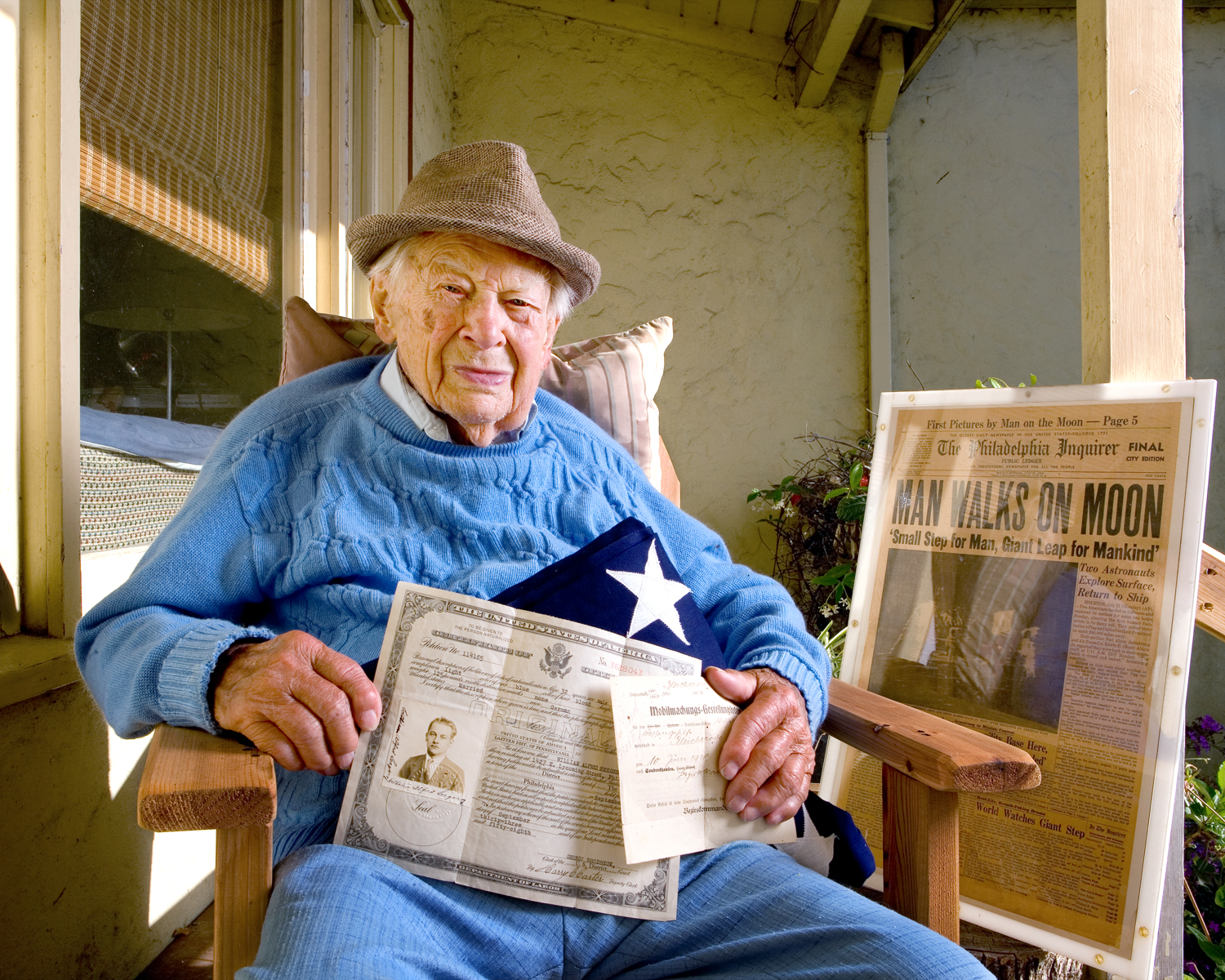
Discharged in 1919, Seegers emigrated in 1922 to the country against which he had been compelled to serve. He joined a cooperative community in Louisiana, met Vinita Thurman, and built an American life. By the time DeJonge photographed him, the former German conscript had become a naturalized American and one of the final known witnesses from Germany’s wartime forces.
The portrait complicates a collection that might otherwise read only as an Allied story. Seegers is not presented as an enemy emblem. He appears as a teenager caught inside a failing empire, a reluctant soldier whose testimony described the war from the other side of the line.